
Écologie intégraleResearch
13 May 2026
 From 15 to 24 April 2026, Icam hosted for the first time a symposium entitled “The Work of Transition: from the Individual to the Organisation. The Material, Moral and Spiritual Drivers of Ecological Transition.” The event, co-organised by Sylvain Lavelle, researcher and lecturer in philosophy, and Louise Geisler-Roblin, researcher and lecturer in philosophy and social sciences at Icam Grand Paris Sud, unfolded over six days, twelve sessions and three locations: the Sorbonne, the Grand Paris Sud campus and the Creuse region, to ground the reflection in a concrete reality of transition.
Starting from a clear-eyed observation
Ecological transition represents an immense challenge for humanity today and for generations to come. A purely material approach, based solely on innovation, will likely prove insufficient to bring about the necessary changes — particularly if it perpetuates the very socio-economic model that lies at the root of the crisis. Exploring alternative pathways for transformation, more deeply rooted in moral and spiritual dimensions, was the central purpose of this symposium. A clear-eyed endeavour, even if it involves the challenge of translating these reflections into concrete, coherent action across all sectors of human activity.
Thinking transition in the world of work
On 15 and 16 April at the Sorbonne, the symposium explored the philosophical and anthropological foundations of transition, with several presentations on the ecological meaning of work, the links between activity, values and collective projects, and the transformation of collective imaginaries. Several roundtable discussions took place, comparing different models of transition (from the Third Industrial Revolution to the Green Deal, from “small” to “large” transition), examining the concrete modes of action available to the state and to businesses, and exploring the spirit of ecology and human labour.

First part of the Symposium at the Sorbonne

Continuing the discussions at the Icam Grand Paris Sud campus
On 17 and 18 April at Icam Grand Paris Sud, discussions refocused on the organisation of work itself: the greening of workers and their practices, the aspirations of “Generation Z,” and the management of ecological change within companies. One roundtable invited reflection on the balance of ecological governance — collective accountability, instruments of change, and value choices. Another centred on ecological change and work organisation, addressing the reduction of working hours, the low-tech approach as a lever for sobriety, and the internal transformation of organisations in the face of socio-environmental imperatives.
A symposium rooted in research and commitment
On 23 and 24 April, the symposium took on a new dimension by immersing itself in the territory of the Creuse region, with the participation of many field actors alongside researchers: forest managers, committed farmers, local project leaders, and representatives of initiatives such as the “Transitions limousines” workshops. This was a time for genuine dialogue between research and engaged action.
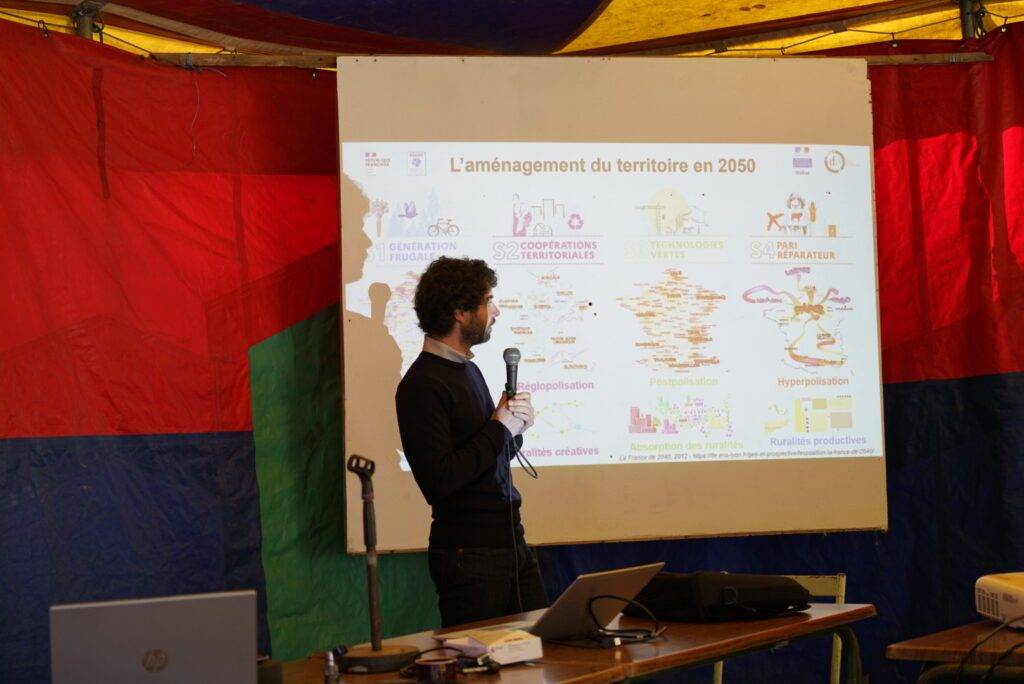
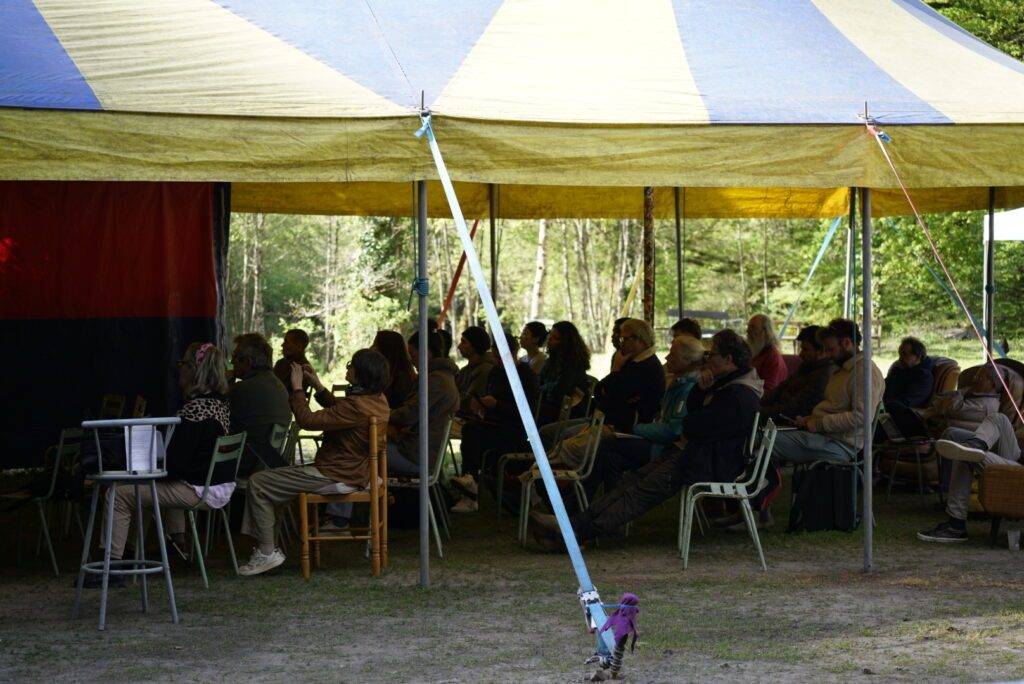
Mesology — the science of the relationships between humans and their environments — provided a conceptual framework for thinking about attachment to place, the meaning of territory, and the dynamics of local transition. The commons occupied a central place in the discussion on change, questioning alternative forms of collective organisation and the roles played by the sustainable management of forests, water and local energy resources.


A field visit, organised by Vincent Magnet — independent forest manager, board member of the association Les Tisserands, board member of Sources et Rivières du Limousin, and member of the scientific and technical council of the Conservatoire d’espaces naturels Nouvelle Aquitaine — brought the symposium to a close by stepping into the concrete reality of transition in action.
What really sets things in motion?
Over the course of six days, one cross-cutting question emerged with particular acuity. As Louise Geisler-Roblin and Sylvain Lavelle note, “it is by no means certain that the framework of ecological transition is settled and unambiguous” — and this is precisely where one of the major challenges lies. What makes a dynamic take hold in an individual and within a collective? What moves people to act and transforms awareness into lasting commitment? These questions, bridging philosophical reflection and everyday choices, ran through the entire symposium and will continue to fuel the work of its organisers and participants.
The symposium was organised with the support of three research centres:
- Sciences Normes Démocratie (Sorbonne Université / CNRS)
- Logiques de l’agir (Université Marie et Louis Pasteur)
- The Centre Éthique Technique Travail Société at Icam