

Icam at the Philippine Association of Engineering Schools: competency-based assessment at the service of international mobility
International
9 Apr 2026
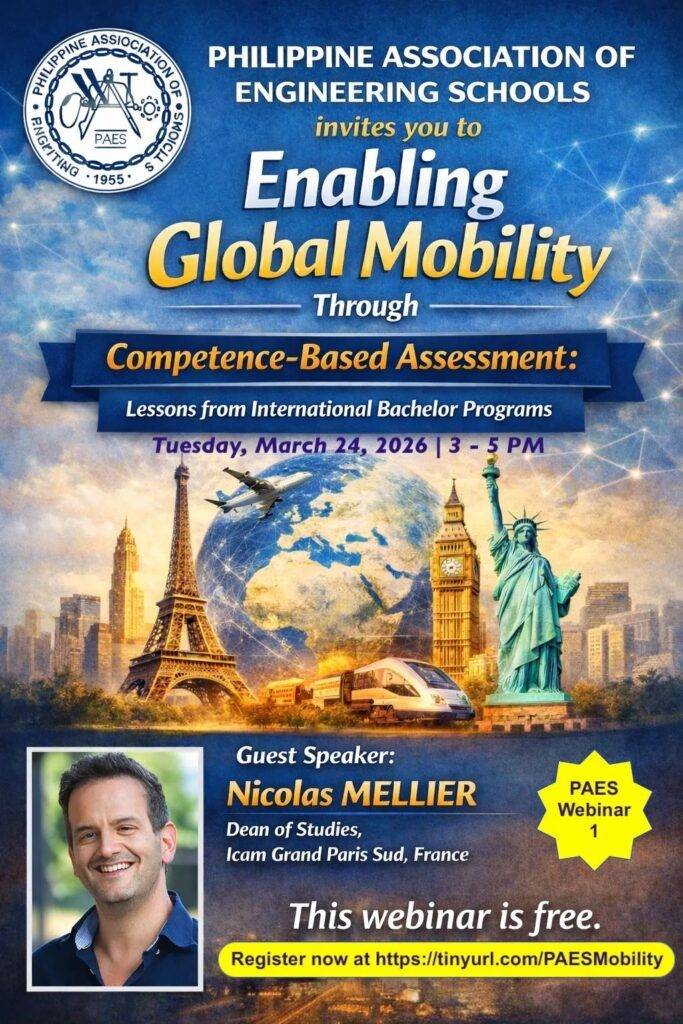
On 24 March 2025, Nicolas Mellier, Dean of Studies at Icam Grand Paris Sud, addressed more than 200 engineering school representatives in the Philippines — marking a new milestone in Icam’s growing influence on engineering pedagogy across Southeast Asia.



A growing partnership with the Philippines
As part of the Erasmus+ KA171 international staff mobility programme, Nicolas Mellier led a conference for the Philippine Association of Engineering Schools (PAES). This was the second time an Icam faculty member has been invited to speak at the association — a clear sign of the deepening ties between Icam and Filipino engineering education institutions and reflecting Icam’s growing commitment to supporting the professional development of Philippine engineering educators. Previously, Jean-Guillaume Le Bouffo shared valuable insights on innovative teaching methods and active pedagogy. Both talks were organized by the Philippine Association of Engineering Schools, with Le Bouffo’s session also co-sponsored by the Office for Higher Education of the Embassy of France to the Philippines and Micronesia.
The session took place in the context of a broader collaboration between Icam and Ateneo de Manila University, whose engineering curriculum — the Ateneo-Icam model — has now been cited as a local reference point for future engineering programmes in the Philippines, where competency-based approaches and active pedagogy are still emerging.
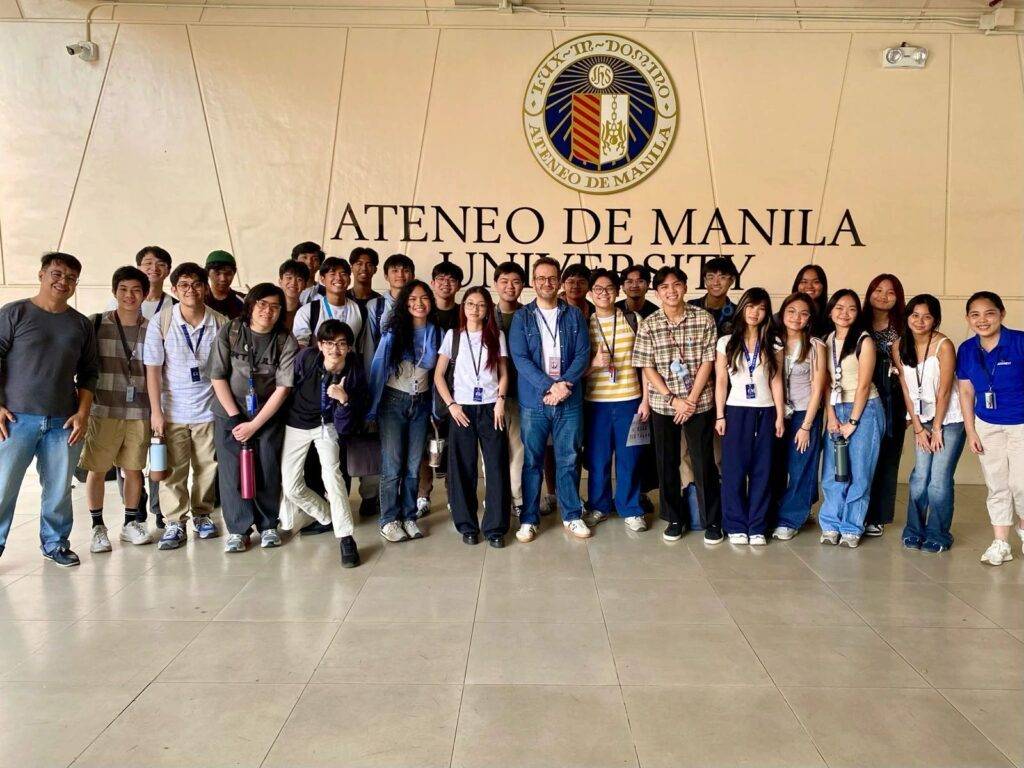
Nicolas Mellier (centre) at Ateneo de Manila University, as part of the Bachelor of Science in Innovation Design Engineering (BS IDE), Icam’s international bachelor programme.
Rethinking assessment to support international mobility
At the heart of Nicolas Mellier’s presentation was a central conviction: as institutions strengthen international mobility pathways, the reliability and transparency of assessment become essential to mutual recognition and student progression. Competency-based assessment shifts the focus away from time-based instruction toward the actual demonstration of skills — ensuring graduates are equipped for complex, international professional environments.
Drawing on concrete examples from Icam’s international bachelor programmes, the session addressed practical approaches to competency mapping, the design of coherent assessment rubrics, the alignment of faculty evaluation practices, and the assessment of interdisciplinary and work-integrated learning experiences.
Nicolas Mellier also showed how technical skills, soft skills, intercultural sensitivity and ethical responsibility can all be effectively assessed within international programme frameworks — providing attendees with actionable strategies to strengthen trust, comparability and quality assurance in global engineering education.