Écologie intégrale
11 Jun 2026
At a webinar organised on 19 May by CDEFI’s Ecological and Societal Transition Commission, dedicated to training engineers in low-tech approaches, Rémy Ducros, coordinator of Icam’s low-tech group and fablab facilitator, presented the school’s distinctive approach. His contribution highlighted Icam’s commitment — formalised at the May 2025 Advisory Board — to the kind of engineering the school wishes to promote at an institutional level: essential engineering.
Why “essential engineering”?
As Rémy Ducros pointed out, the term “low-tech” is often misunderstood — reduced to a simple opposition with “high-tech”, or even equated with tinkering. That is why at Icam, we speak of essential engineering: an approach refocused on real needs, which avoids unnecessary complexity without compromising technical rigour. An approach that knows, for instance, when to use artificial intelligence — and when to do without it.
“Training essential engineers is not about training engineers who are ‘less technological’: it is about training engineers capable of making the right technological choices in a constrained world. It means learning to innovate within the limits of the real world and understanding that some problems are not always — or solely — technical,” explains Rémy Ducros.
Three criteria, one philosophy
This approach rests on three essential criteria that Icam has fully integrated into its thinking:
- Useful: the project meets a real need and will actually be used. The Tiny House built by Icam Toulouse students is a concrete example: the time spent analysing the need was as significant as the time spent on design.
- Accessible: easy to build, documented, and replicable — through fabrication tutorials, for instance.
- Sustainable: robust rather than optimised, repairable, and rooted in its local context.
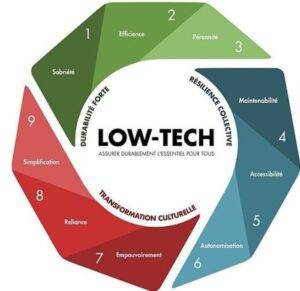
These three criteria are complemented, within Icam’s strategy, by the nine criteria defined by Arthur Keller, which embed the approach within a systemic vision integrating sobriety, resilience and sustainability.
A strategy of gradual infusion
What sets Icam apart is its choice of cross-cutting infusion. The goal: to progressively irrigate programmes, projects and campus life so that essential engineering is lived as a collective experience — evolving a way of thinking, designing and acting in line with integral ecology, deeply rooted in Icam’s DNA.
This is what fourth-year students experience at Icam Nantes, through the I4.8 “essential engineering” professionalising semester. This semester, focused since 2012 on renewable energies, has evolved over the past two years to incorporate low-tech and essential engineering, while naturally retaining its renewable energy content.
“How to find the right technological fit for primary needs — that is what we train students to do, through lectures, tutorials and, for major projects, their own work. It means rediscovering the practical side and hands-on know-how, which they love, while understanding that high-tech can be used to arrive at a low-tech solution,” explains Jean-François Largeau, lecturer-researcher at GEPEA. This year, students also worked with the social enterprise association Ruptur on the business plan for a low-tech project — an essential step in ensuring these projects are sustainable and economically viable.
🌱 Another illustration of this essential engineering approach can be found at the Toulouse campus, where two projects are underway, led by Antoine Cruypenninck, Icam engineer and lecturer in industrial management and eco-design, and carried out by students as part of their I4.8 “sustainable construction” professionalising semester.
The first focuses on energy sobriety in the Icam student residence, aiming to reduce energy consumption with minimal investment. The first phase aims to equip a model apartment — by the end of June or early July — with a computer system and communicating sensors for energy and fluid monitoring, collecting usage data while respecting residents’ privacy. Beyond the technical aspect, the project also examines usage patterns and behaviours, with a significant focus on education for everyday life. “Pilot projects show we could easily cut consumption by 20% simply by informing residents and sustaining the momentum. In this approach, sobriety and improved comfort go hand in hand!” notes Antoine Cruypenninck.
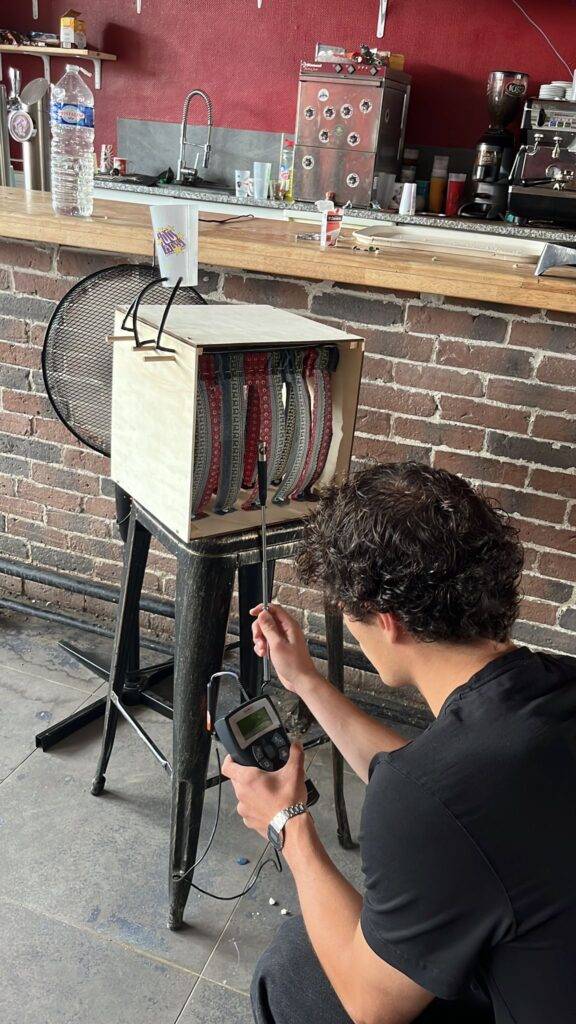
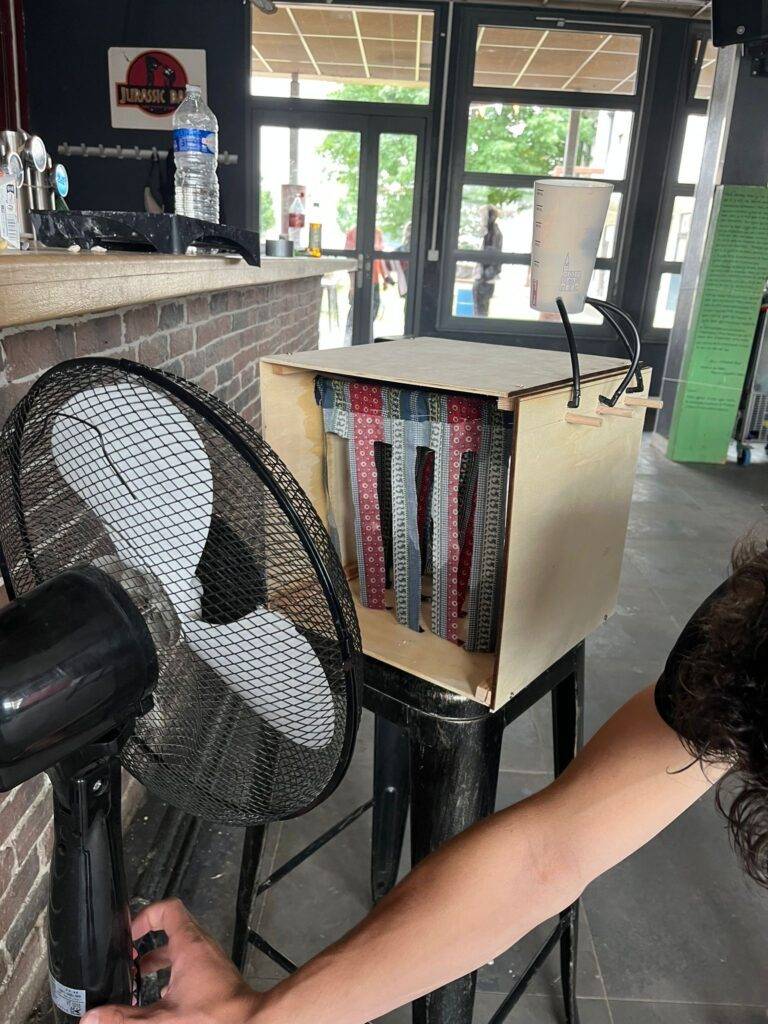
The second project involves developing a low-tech evaporative air cooling system. A genuinely scientific endeavour involving the characterisation of physical parameters, it is grounded in a circular economy approach.
“It is getting hotter and hotter in our offices and flats, so who better than students to come up with a simple, affordable and shareable solution, using straightforward techniques and materials that any student or staff member could build themselves (open source), at low cost?” summarises Antoine Cruypenninck. Several configurations have already been tested by students, and the first results are very encouraging, a refreshingly cool demonstration is scheduled for the end of June!